Beta-blogger greatly discouraged me...
Because of the pain, I am switching to Wordpress blogs.
From this point forth, I have combined our married-persons blog and my blog into one and you can find it here: largerneedle.wordpress.com
Monday, November 13, 2006


Eipscop-Alien Gospel and The Need For "Fences"
 Upon reading a blog post by Mark Driscoll on TheResurgence, I learned that the Episcopal (Anglican) Church has elected a female leader for their denomination in Katharine Jefferts-Schori. The pro-feminism, pro-homosexual marriage Jefferts-Schori is the first female leader of the denomination which has been in existence for approximately 500 years. If you want to read a bit more on her, you can check out the link I provided above.
However, if you do check out the post Driscoll, you may want to also check out another link provided in the "comments" section of that blog, of an article on Jefferts-Schori by Time Magazine. (Note: I am no longer typing the "Jefferts-" part of her last name...considering her hyphenation is probably some feminist attempt to remain independent of her husband.) In said article, there is some very revealing information when Schori answers questions asked of her by the journalist. I will post the ones that I think are most alarming:
- Question: What will be your focus as head of the U.S. church?
Answer: Our focus needs to be on feeding people who go to bed hungry, on providing primary education to girls and boys, on healing people with AIDS, on addressing tuberculosis and malaria, on sustainable development. That ought to be the primary focus. - Question: The issue of gay bishops has been so divisive. The diocese of Newark, N.J., has named a gay man as one of its candidates for bishop. Is now the time to elect another gay bishop?
Answer: Dioceses, when they are faithful, call the person who is best suited to lead them. I believe every diocese does the best job it's capable of in discerning who it is calling to leadership. - Question: Many Anglicans in the developing world say such choices in the U.S. church have hurt their work.
Answer: That's been important for the church here to hear. We've heard in ways we hadn't heard before the problematic nature of our decisions. Especially in places where Christians are functioning in the face of Islamic culture and mores, evangelism is a real challenge. [But] these decisions were made because we believe that's where the Gospel has been calling us. The Episcopal Church in the U.S. has come to a reasonable conclusion and consensus that gay and lesbian Christians are full members of this church and that our ministry to and with gay and lesbian Christians should be part of the fullness of our life. - Question: What is your view on intelligent design?
- Answer: I firmly believe that evolution ought to be taught in the schools as the best witness of what modern science has taught us. To try to read the Bible literalistically about such issues disinvites us from using the best of recent scholarship.
- Question: Is belief in Jesus the only way to get to heaven?
Answer: We who practice the Christian tradition understand him as our vehicle to the divine. But for us to assume that God could not act in other ways is, I think, to put God in an awfully small box. - Question: What is your prayer for the church today?
Answer: That we remember the centrality of our mission is to love each other. That means caring for our neighbors. And it does not mean bickering about fine points of doctrine.
Her primary...PRIMARY...focus is to feed the hungry, heal diseases, and provide education. These are good things for Christians to practice, but are they our primary focus? What happened to the worship of Jesus? Is it not the desire for Jesus to be worshiped and for his glory to be known - through the gospel - that Christians take action in the world? Without our foundation, there will be no fire that sends us out to do good works, that people might see them and "give glory to our Father who is in Heaven", Christians become humanists rather than Jesus-lovers, and the renown of Christ is belittled.
If a diocese elects a gay bishop, then their so called "discernment" is nullified and no one should submit to their leadership. Yet, according to Schori, there is no discrepancy between a diocese being "faithful" and their election of a gay bishop.
If gays and lesbians are indeed full members of the church of Jesus, well...then we have been deceived by the Bible: "Do you not know that the unrighteous will not inherit the kingdom of God? Do not be deceived: neither the sexually immoral, nor idolaters, nor adulterers, nor men who practice homosexuality, nor thieves, nor the greedy, nor drunkards, nor revilers, nor swindlers will inherit the kingdom of God." 1 Cor. 6:9-10. The funny thing is...Paul says in that passage "do not be deceived"...thus, we know Schori is out of bounds in saying just the opposite.
If reading the Bible "literalistically" (I thought it was just "literally", evidently we must add "istical") disinvites us from scholarship...so be it. We are not here to reject the literal teachings of the Bible for the sake of being invited into a scholarly fraternity.
Here's the one that burns me (and Jesus) the most: To say that Jesus is the only way to God is to put God in an "awfully small box." To make little of the sovereign plan of God - in which he crucified his own Son to appease the wrath he had against us, adopting us into the family of God, securing for us an eternity spent with him - by calling it a "small box" is indeed blasphemous. Katharine Schori looks at Jesus and says, "What you have done is not big enough for me."
And to sum up her prayers for the church, she says that she would have us remember that the centrality..CENTRALITY...is to love each other. All this time...2000 some-odd years...and the church has been centered around the wrong thing. Thank you, Katharine Schori, for clearing that up. Our center is no longer Jesus. Our center is no longer the gospel. Our center is no longer the hope of having Christ as your portion forever. Nope...our center is a vague definition of love (see this post).
I plead with all who read this: Build fences around the gospel of Jesus Christ, who bore your sins. Protect it by establishing truths from the Bible. Draw lines when it comes to doctine. And over time, those who would call you unloving for doing so will no longer have a gospel. They will have their "feet firmly planted in mid-air". Be careful that your passion for unity does not truncate your REASON for unity: the gospel of Jesus Christ. Mind you...we are watching as the Episcopal denomination has declared itself higher than the very Word of God. Remind you of anything.....?....
"Now the serpent was more crafty than any other beast of the field that the LORD God had made.
He said to the woman, Did God actually say, 'You shall not eat of any tree in the garden'?
He said to the woman, Did God actually say, 'You shall not eat of any tree in the garden'?
"But the serpent said to the woman, 'You will not surely die. For God knows that when you eat of it your eyes will be opened, and you will be like God, knowing good and evil.'
"...she took of its fruit and ate, and she also gave some to her husband who was with her, and he ate."
- Gen. 3:1,5,6
Wednesday, November 08, 2006

Monday, November 06, 2006

Book Review: No Place for Truth (Or Whatever Happened to Evangelical Theology)

I am so stoked that I actually found a big picture of a book.
Anyways...I'm not sure I can do a brief book review for this one. It covers way too many topics; so much so that it's hard to believe that David Wells stuck it all inside this relatively small book. Nonetheless, I shall do my best.
I think maybe the best route would be to do a bulleted list of some of the things he covers, and then I'll say a few words (as if they matter).
-The decline of the church as the center of communities.
-The decline of communities.
-The effects of modernism on society.
-The effects of modernism on the church.
-The disappearance of theology (and thinking for that matter) from the church.
-The rise of "businessmen-as-pastors" and the decline of real shepherds.
-The predicament of our "advancing" society and the type of person it produces.
-Shallowness in the understanding of God in the church (see bullet #5 from above).
-Several ironies:
a) America's people beg for more options (in everything), yet the options leave them overwhelmed and less-productive.
b) The de-emphasis of theology in order to focus on evangelism; yet the de-emphasis of theology makes evangelism disappear (because evangelism is rooted in good theology).
c) The incorporation of secular management techniques in churches that condemn the practices of secular culture.
The list could go on. When I read this book, I felt as though I had a bird's-eye-view of what is going on with the American church. Wells is verbose; but if one takes the book slowly (a must) and follow his lines of thought, his crystal-clear conclusions come into view, leaving the reader dumbfounded at what is going on in everyday life. Sometimes we are so rooted in culture, we are not able to diagnose its maladies. I am thankful for Wells, as he untangles the knots of complication that are the trends of the American church. This book is the first in a four-part series. Be looking for book reviews of the other in the future, and hopefully I can tie them all together.
Saturday, November 04, 2006
The Necessity of The Minister's Self-Watch
By now many of you have heard of the controversy surrounding former president of the National Association of Evangelicals and pastor of the 14,000 member New Life Church, Ted Haggard. He was accused of paying for sex from a homosexual male prostitute (which he denies). However, what has surfaced is that he did pay to receive massages from him and purchased methamphetamines from him. All of these discoveries were made after he denied even knowing his accuser. It is a horrible, horrible situation and I can't imagine what his wife and five kids are going through.
However, this blog post is not to rant about that, but to point you to a recent blog post by Mark Driscoll on the dangers of pastoring and a bulleted list of practical helps that ministers should pay heed to in order to flee from sin and temptation. I learned much by reading it and I think it's profitable for anyone planning on doing faithful ministry.
Also, a reminder to anyone who chooses to exalt himself over Haggard as though they have a better ability to resist sin...I quote you Allen Duty: "The only difference between us and him is inches...we are all only inches away from temptation and sin all the time." We are not good people; and we sure as heck do not have any power in and of ourselves to resist sin. We must press into Christ to know him and love him more; building a hatred for sin and an intense love for holiness.
However, this blog post is not to rant about that, but to point you to a recent blog post by Mark Driscoll on the dangers of pastoring and a bulleted list of practical helps that ministers should pay heed to in order to flee from sin and temptation. I learned much by reading it and I think it's profitable for anyone planning on doing faithful ministry.
Also, a reminder to anyone who chooses to exalt himself over Haggard as though they have a better ability to resist sin...I quote you Allen Duty: "The only difference between us and him is inches...we are all only inches away from temptation and sin all the time." We are not good people; and we sure as heck do not have any power in and of ourselves to resist sin. We must press into Christ to know him and love him more; building a hatred for sin and an intense love for holiness.
Friday, November 03, 2006
The NBA and The Son of Man
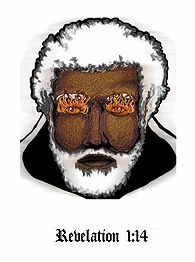
You don't expect to read an article like this when you're rummaging through ESPN.com. Well, at least if you're me. Needless to say it caught my attention for a good while.
For those of you who clicked on the above link, saw the article, and decided you did not have time to read the whole thing...here's the skinny. Lamar Odom, a forward for the Las Angeles Lakers, has had some recent suffering in his life. His offseason included burying his infant son Jayden, the death of his aunt, and a robbery at gunpoint in Queens, NY (he was shot at as the robber fled the scene). Thus, Mr. Odom has been sobered. Apparently - and rightfully so - the death of his infant son has done the most to awaken him to reality. According to the article, he has been thinking much about death, evil, etc. All of which is enough to make a human question what is going on in the world.
However, his response is quite intriguing. He is coming out with his own line of clothes. What will they look like, you ask? Well, for an example one can view the above image on this blog post. The clothing line is called "Son of Man" and the clothes will exhibit pictures of Jesus as Odom interprets them from the Bible. The one above, as you can tell, is the Jesus who is coming back "not too happy" as Mr. Odom would say. He hopes that his clothing will make a statement about Jesus being a real role-model/icon for youngsters to look up to, as opposed to current day rappers and athletes who do not do such a good job of the aforementioned. Though outerwear is involved in his response, do not dismiss Odom's thinking as merely skin deep. His pain is real and he is clamoring for something.
The article goes on to talk about how the recent tragedies have turned him back to his roots as he was raised going to church. However, he also mentions something about the Quran - as though he is interested in it as well - and he has hired a Muslim cleric to teach him about Islam. What does this all mean? Beats the heck out of me. It seems though that death has Odom thinking about eternity so much that he is reaching in different directions trying to find something. So, I posted this for several reasons. 1) If you remember, pray Jesus would speak to Odom as he rummages through the Bible, and that he would be drawn to Jesus and not Mohammad. 2) Pray Jesus would be seen as more than just a role model. 3) Be on the lookout for these clothes...what a great conversation starter! 4) I just thought it was incredibly interesting.
(P.S. - I say "Son of Man" is way better than "Jesus is My Homeboy")
Monday, October 30, 2006
 The Goose and the Gospel
Jan Hus, 1380-1415
He's not the most popular reformer out there. In fact, his memory lives in the shadow of his own successors Luther, Calvin, and Zwingli. Some may not even wish to call him a "reformer" seeing as how he died a century before anything sparked the movement we know as the Reformation. Yet, I hope that a brief recounting of his story will show a couple of things in light of this year's Reformation Day:
1) God keeps people for himself in every generation, despite the dark clouds that well up and try to blot out the glory of the gospel in some eras.
2) The sovereignty of God in bringing about the Reformation.
Jan Hus was born a Bohemian (modern-day Czech Republic) in 1371 [Important: "Hus" is the Bohemian word for "goose", and he referred to himself as such, as did his friends]. Though he was born a peasant, he pursued a path in higher education and enrolled at the University of Prague where he received a masters degree in 1396, became professor of theology in 1398, and was ordained to the priesthood in 1400. This time period was actually quite messy for the Roman Catholic church, for this is when "The Great Schism" took place.
The schism describes a split in the authority of Roman Catholicism. Under pressure from the King of France, the seat of the Popes was moved the Avignon France where it remained for 70 years (now called the "Babylonian Captivity" of the church, referring to the 70 years that the Jews were enslaved to the Babylonians). In 1376, the pope returned to Rome and died. Thus, his accompanying French cardinals were pressed to elect another pope. However, feeling the pressure from the citizens of Rome, they elected an Italian pope. Afterward, they fled and denounced their decision claiming they were under pressure; therefore, their papal election was void. From France, they then elected another pope who was French. Now there were two popes, and to settle the matter they arranged the Council of Constance. At the council, they elected another pope...hoping the other two would step down (which they did not do). Therefore, the successor of the third pope - Pope John XXIII - decided to subdue his rivals by force. In order to do this, he would have to raise money for a war effort to supply his men with weapons, armor, etc. He chose as his fundraising method the selling of indulgences; that is, if one pays enough money, he/she can buy spiritual blessings. The selling of indulgences was rampant and Hus was not about to tolerate it.
(During this time it is important to note that Hus had been greatly affected by the writings of John Wycliffe...another pre-Reformation reformer). Hus spoke out against the indulgences and other Roman Catholic practices, such as the belief that the pope was God's divinely appointed head of the church. Being he was a respected professor and well-loved priest, his audience was not small. His decryings of the pope's evils made so much noise that he himself was summoned to appear before the Council of Constance to give an account for his "blasphemous" teachings. They granted him safe passage even if he was found guilty; thus, he came before the Council.
However, his enemies lied and when he would not recant, they chained him up, and paraded him through the streets as a heretic. Shortly thereafter, Jan Hus was burned at the stake for his teachings.
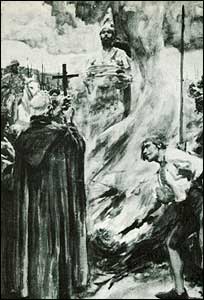 But before his captors could shut him up with the fire, as he was singing hymns, he also made this prophetic announcement (as quoted by one of his onlooking opposers):
"You are now going to burn a 'goose', but in a century you will have a swan, which you can neither roast nor boil." The year...1415.
One hundred and two years later, Martin Luther nailed up his 95 theses in Wittenburg, Germany...sparking the Reformation. For many, the swan spoken of by Hus is Martin Luther; one who the authorities could not silence.
Whether or not Hus was prophetic is not the point. The point is, Christ has kept for himself believers in every generation, using them to strengthen and teach one another (i.e. - Wycliffe and Hus, Hus and Luther). And how God willed the burning of a 'goose' that led to the singing of a 'swan'. Thank God that he preserves his gospel throughout history in order to save those whom the Father has given to the Son.
Happy Reformation Day.
Sunday, October 29, 2006
Book Reveiws Out of My Ears
Well...not quite out of my ears. It's not like I'm reviewing eight books or something. However, I am going to do two short reviews. Recently, Justin Taylor of "Between Two Worlds", put out a generous offer. To anyone who so desired, he would send pdf files (that means Adobe Acrobat) of two upcoming releases from Crossway Books for that person to read and review a few chapters. Subsequently, if that person posted a review on his/her blog and on Amazon.com, then Crossway would send them a free copy of both books when they came out. So, I took part in it and thus...this blog. The books were "Suffering and the Sovereignty of God" - the book format of the 2006 Desiring God National Conference - and "Overcoming Sin and Temptation" by John Owen (edited by Justin Taylor and Kelly M. Kapic).
Suffering and the Sovereignty of God Review
-Sobering. As we live in a culture in which we get lost in the minutiae of every day, this book makes one stop and think. To read about God’s plan for pain is jolting; which, if you think about it, it is quite unbiblical that suffering be such a shock. Jesus came in order to suffer; the Son of Man was a martyr for his Father’s plan. After Jesus blinded Saul on the road to
Overcoming Sin and Temptation Review
-“If vain spending of time, idleness, unprofitableness in men’s places, envy, strife, variance, emulations, wrath, pride, worldliness, selfishness be badges of Christians, we have them on us and among us in abundance…The good Lord send out a spirit of mortification to cure our distempers, or we are in a sad condition!” -Owen. Reading John Owen on sin feels as though he has tapped into my own mind’s infirmities. His reflections on the subject of sin and temptation make me know that not only does he know what the Bible says particularly about sin, but also that he is honest with his own thought-life and applies the Word. I feel as though I waste time hacking at the fruits of sin, while Owen swings a mighty axe at the root; severing anything that might dare spring up and flower. What’s more, is that this particular book is – I feel – more accessible than some of Owen’s other readings due to the faithful work of its editors. Justin Taylor and Kelly Kapic do a great job of analyzing Owen and giving suggestions on how to read and think about the man behind the writing as well as the writing itself.
So, there you have it. I would especially encourage anyone in my generation to read these books, as they are written by older saints who have gone before us and who have remained faithful in the ministry of the gospel.
Tuesday, October 17, 2006

Reformation Day....Oct. 31st
It's time to celebrate. However, instead of the normally promoted "Halloween", or as some old school witch doctors say "All-Hallow's-Eve", why not celebrate a movement in which the gospel of Jesus Christ was pushed back to the forefront of Christendom? I'd say that's something to celebrate. Who knows where we'd be if the Reformation had not happened? There has been a suggestion for the blog world as to how to commemorate such a great move of God by Justin Taylor. I think I'm in on it as far as posting a blog about it (but not the contest part).
So...mark your calendars, and remember some of our fellow saints who have gone before us and handed down the faith "that was once for all delivered to the saints".
So...mark your calendars, and remember some of our fellow saints who have gone before us and handed down the faith "that was once for all delivered to the saints".
Monday, October 16, 2006
 You guys should come to my next concert.
Woot.
(It's not really me.)
(Now I'm writing like Heather...no more than six words per line I think.)
(Very sporadic.)
Thursday, October 12, 2006

Dolla' Dolla' Bills, Ya'll
So much for me being faithful in posting thoughts about money. It's been too long. The problem I have in thinking about what Jesus said about money, is that I just think about it. I don't actually write stuff down, organize my thoughts, or actually form cohesive thought about it. Thus the lack of posts about this topic.
"No one can serve two masters, for either he will hate the one and love the other, or he will be devoted to the one and despise the other. You cannot serve God and money." -Matt. 6:24
I'd say this is just as good a starting place as any to look at what Jesus said concerning money. I guess the question we're left with is...how do you serve money? I think the answer is different from what we might give as a quick answer. Or maybe we should ask also, how do you serve God? Also in line are these questions: If you love money, why do you hate God? And if you love God, why do you hate money? This is what is presented to us in the aforementioned verse. If you serve money, you'll hate God...and if you serve God you will despise money. That is what I plainly read, anyway. So there is much to deal with concerning this passage.
Let's start with "If you love money, why do you hate God?": It seems there is two ways to do this. First, you can make money your sole object of affection; that is, money is what you are consumed by. Thus, if anything else threatens your affection for money, you hate it. If Jesus comes in making demands from you about money (as he did with the rich young ruler), you will hate him for that. Secondly, there is a more subtle way that I feel we are more prone to do; that is, one can use God as a means to get money. You worship as a means to become wealthy. If God is a means to ANYTHING, he is hated. If God is the route you take to get to some other ultimate end besides God, you have hated God. It is that simple. I am reminded of Jeremiah 2:12-13 -
"No one can serve two masters, for either he will hate the one and love the other, or he will be devoted to the one and despise the other. You cannot serve God and money." -Matt. 6:24
I'd say this is just as good a starting place as any to look at what Jesus said concerning money. I guess the question we're left with is...how do you serve money? I think the answer is different from what we might give as a quick answer. Or maybe we should ask also, how do you serve God? Also in line are these questions: If you love money, why do you hate God? And if you love God, why do you hate money? This is what is presented to us in the aforementioned verse. If you serve money, you'll hate God...and if you serve God you will despise money. That is what I plainly read, anyway. So there is much to deal with concerning this passage.
Let's start with "If you love money, why do you hate God?": It seems there is two ways to do this. First, you can make money your sole object of affection; that is, money is what you are consumed by. Thus, if anything else threatens your affection for money, you hate it. If Jesus comes in making demands from you about money (as he did with the rich young ruler), you will hate him for that. Secondly, there is a more subtle way that I feel we are more prone to do; that is, one can use God as a means to get money. You worship as a means to become wealthy. If God is a means to ANYTHING, he is hated. If God is the route you take to get to some other ultimate end besides God, you have hated God. It is that simple. I am reminded of Jeremiah 2:12-13 -
"Be appalled, O heavens, at this; be shocked, be utterly desolate, declares the Lord, for my people have committed two evils: they have forsaken me, the fountain of living waters, and have hewed out cisterns for themselves, broken cisterns that can hold no water."
Therefore, perhaps we can apply the same reasoning when answering, "If you love God, why do you despise money?" If you love God with all your heart, soul, mind, and strength as we are commanded (...which we all fail to do), you will hate money if it encroaches upon your desires for God. If money comes in and tempts you to give away any of your devotion, longing, or desire for Jesus, then you must hate it. When it comes to love for God, Jesus did not soften his message: "If anyone comes to me and does not hate his own father and mother and wife and children and brothers and sisters, yes, and even his own life, he cannot be my disciple." Here we see the strong language again. Are we to actually disdain our parents? Are we to loathe them? Are we to hold money-burning ceremonies to show our hatred for it? Or how about this: "If your right hand causes you to sin, cut it off and throw it away. For it is better that you lose one of your members than that your whole body go into hell." Are we to literally cut off our hands? If so, the vast majority of Christians would be walking around without hands...as well as eyes. Without trying to make this easier to swallow, I do wish to interject a thought.
Jesus is serious about our affections for him versus everything else; we are not to give glory to anything else. We are not to be satisfied in anything else. Therefore, if any desire, including money, competes for our love for Jesus, we must take extreme measures. If we are tempted to follow money rather than Jesus in any decision, we must repent. If we look adoringly upon the security money offers us, we must flee from it. Money is to be held loosely, I think. "Do not store up treasure on earth where moth and rust destroy and where thieves break in and steal." Thus, if we love money, we hate God. If we love God, we hate money. I'd love to hear thoughts on this....
Next up: How do we serve money? How do we serve God?
Jesus is serious about our affections for him versus everything else; we are not to give glory to anything else. We are not to be satisfied in anything else. Therefore, if any desire, including money, competes for our love for Jesus, we must take extreme measures. If we are tempted to follow money rather than Jesus in any decision, we must repent. If we look adoringly upon the security money offers us, we must flee from it. Money is to be held loosely, I think. "Do not store up treasure on earth where moth and rust destroy and where thieves break in and steal." Thus, if we love money, we hate God. If we love God, we hate money. I'd love to hear thoughts on this....
Next up: How do we serve money? How do we serve God?
Thursday, September 28, 2006
 "The bodies of 40 men who were shot and had their hands and feet bound have been found in the capital over the past 24 hours, police said Thursday. All the victims showed signs of torture, police Lt. Thayer Mahmoud said. They were dumped in several neighborhoods in both eastern and western Baghdad, he said. The top U.S. military spokesman in Iraq, , Maj. Gen. William B. Caldwell, on Wednesday said murders and executions are currently the main cause of civilian deaths in Baghdad. Much of the violence has been attributed to death squads, many of which are thought to be offshoots of mainly Shiite militias." -CNN.com
I was confronted this morning by a lingering question concerning this article: Who will take the gospel to the "death squads"? Just something to think about...I know I will.
Tuesday, September 26, 2006

"It Ain't Sausage if it Ain't Janak's"
The words I typed above appear on a sign directly below the character seen above. (If you did not notice, the guy is a big sausage link with a cowboy hat on...I love this picture). Nonetheless, my post is actually not about Janak's (pronounced who knows how), but rather something I learned on a dove-hunting trip this weekend, during which we passed this sign along with a couple other priceless gems.
I went on the trip with David Rekerdres (Bethan's brother) and Landon Carl seen below:

We had a great time. We shot flying animals, we ate them, and we had some good time just hanging out and enjoying time on the ranch.
But, the thing I learned, is that though I enjoyed myself thoroughly, I was able to see that my life with Bethan is much more enjoyable. I started thinking about all the things she does as my wife, and about the time we spend together...and I have to say that it is way better than anything else I could do anywhere with anyone else. I love her very much, and my quality of life has increased one-hundred fold since marriage.

Thank you Jesus for Bethan.
I went on the trip with David Rekerdres (Bethan's brother) and Landon Carl seen below:


We had a great time. We shot flying animals, we ate them, and we had some good time just hanging out and enjoying time on the ranch.
But, the thing I learned, is that though I enjoyed myself thoroughly, I was able to see that my life with Bethan is much more enjoyable. I started thinking about all the things she does as my wife, and about the time we spend together...and I have to say that it is way better than anything else I could do anywhere with anyone else. I love her very much, and my quality of life has increased one-hundred fold since marriage.

Thank you Jesus for Bethan.
Sunday, September 10, 2006

Spiritual Bankruptcy in the Prosperity Gospel
First...read this article.
Now, on with the post. It is obvious that the way we teach about money and the way we use money can effect the world, and more importantly...souls. I am greatly angered that people who do not know Jesus walk into churches and hear such garbage and again walk out of the church continuing to dangle over the pit hell; not having any clue as to what is real or truthful.
It is clear to me that the prosperity gospel is emtpy, it must be abominated, and we must not consider toying even with it's outlying teachings. Needless to say, I have been further motivated to continue learning and writing about what Jesus says about money, possessions, and comfort (I added comfort because it seems as though being comfortable is also included in what Jesus desires for his people...whom he calls to die...and suffer with him for the gospel...hmmmm).
Now, on with the post. It is obvious that the way we teach about money and the way we use money can effect the world, and more importantly...souls. I am greatly angered that people who do not know Jesus walk into churches and hear such garbage and again walk out of the church continuing to dangle over the pit hell; not having any clue as to what is real or truthful.
It is clear to me that the prosperity gospel is emtpy, it must be abominated, and we must not consider toying even with it's outlying teachings. Needless to say, I have been further motivated to continue learning and writing about what Jesus says about money, possessions, and comfort (I added comfort because it seems as though being comfortable is also included in what Jesus desires for his people...whom he calls to die...and suffer with him for the gospel...hmmmm).
Sunday, September 03, 2006

Jude Elijah Estes
Sept. 3, 2006
3:54 p.m.
6 lbs. 3 oz., 19 in.

Sept. 3, 2006
3:54 p.m.
6 lbs. 3 oz., 19 in.

Congratulations Jon and Sally!!
Jesus has blessed you with a beautiful baby boy!
"Hear, O Israel! The LORD is our God, the LORD is one! You shall love the LORD your God with all your heart and with all your soul and with all your might. 'These words, which I am commanding you today, shall be on your heart. You shall teach them diligently to your sons and shall talk of them when you sit in your house and when you walk by the way and when you lie down and when you rise up.'"
Jesus has blessed you with a beautiful baby boy!
"Hear, O Israel! The LORD is our God, the LORD is one! You shall love the LORD your God with all your heart and with all your soul and with all your might. 'These words, which I am commanding you today, shall be on your heart. You shall teach them diligently to your sons and shall talk of them when you sit in your house and when you walk by the way and when you lie down and when you rise up.'"
Monday, August 28, 2006

Jesus: The Sheep Door (An Interlude in the Posts About Money)
John 10:1 - "Truly, truly, I say to you, he who does not enter the sheepfold by the door but climbs in by another way, that man is a thief and a robber."
No, the man in the above picture is not Jesus...But, this morning I was thinking about this verse and all the other doors that people try and enter through, in order to become part of the sheepfold of God. I was thinking that there are those who try to blend in with the church by doing good deeds. Some try and rest in church attendance. And soon I thought to myself, some try and come through the door of "a relationship with Jesus". Now, many who read that may think..."Brandon, you are indeed blasphemous. Are you saying it is bad to have a relationship with Jesus?" Well, for those reading this...probably not. For those who are born again do indeed have a relationship with Jesus. But for many, this is a problem.
What I mean by this, is that the Bible NEVER teaches that a mere relationship with Jesus is what brings about salvation. In fact, I don't know that Jesus ever says to anyone, "To be saved, come...have a relationship with me." I think the dangerous part of this kind of talk is that many Christians say, "You must have A relationship with God." In other words, "there are many kinds of relationships...just choose one of them." This all may sound ridiculous, but I have talked to people who were raised in churches that taught "relationship instead of religion". They could talk to me till they were blue in the face about "knowing" Jesus and "having a relationship with him", yet they were not born again. Interesting how that happens, huh? But as I look at the gospel of "having a relationship" with Jesus, I notice that it is a gospel that the world can swallow quite easily. They think to themselves, "I have relationships with many people. In fact, I am quite good at relationships. I have a relationship with my wife, my kids, my parents, my boss, my secretary, my friends...I've got relationships coming out my ears!" And thus they construct a relationship with Jesus by their standards, not by God's.
If we are to talk about having a relationship with Jesus, we must also include the criteria of that relationship...you know, like Jesus did. He never told people to have a relationship with him, but he did say "Repent, for the kingdom of heaven is at hand." He did say, "Turn from your sin." He did command people to "believe in the Son of Man." He did tell others that if they did not believe, "the wrath of God remains upon him." He also told people that they must be "born again to see the kingdom of heaven", and to "love God with all their heart, soul, mind, and strength." But he never left anyone guessing with wishy-washy talk about having a relationship, which...if you think about it...is quite confusing and unclear.
Therefore, I think we need to be careful; because telling someone to just "have a relationship" with Jesus can often lead them through a door that is not The Door.
No, the man in the above picture is not Jesus...But, this morning I was thinking about this verse and all the other doors that people try and enter through, in order to become part of the sheepfold of God. I was thinking that there are those who try to blend in with the church by doing good deeds. Some try and rest in church attendance. And soon I thought to myself, some try and come through the door of "a relationship with Jesus". Now, many who read that may think..."Brandon, you are indeed blasphemous. Are you saying it is bad to have a relationship with Jesus?" Well, for those reading this...probably not. For those who are born again do indeed have a relationship with Jesus. But for many, this is a problem.
What I mean by this, is that the Bible NEVER teaches that a mere relationship with Jesus is what brings about salvation. In fact, I don't know that Jesus ever says to anyone, "To be saved, come...have a relationship with me." I think the dangerous part of this kind of talk is that many Christians say, "You must have A relationship with God." In other words, "there are many kinds of relationships...just choose one of them." This all may sound ridiculous, but I have talked to people who were raised in churches that taught "relationship instead of religion". They could talk to me till they were blue in the face about "knowing" Jesus and "having a relationship with him", yet they were not born again. Interesting how that happens, huh? But as I look at the gospel of "having a relationship" with Jesus, I notice that it is a gospel that the world can swallow quite easily. They think to themselves, "I have relationships with many people. In fact, I am quite good at relationships. I have a relationship with my wife, my kids, my parents, my boss, my secretary, my friends...I've got relationships coming out my ears!" And thus they construct a relationship with Jesus by their standards, not by God's.
If we are to talk about having a relationship with Jesus, we must also include the criteria of that relationship...you know, like Jesus did. He never told people to have a relationship with him, but he did say "Repent, for the kingdom of heaven is at hand." He did say, "Turn from your sin." He did command people to "believe in the Son of Man." He did tell others that if they did not believe, "the wrath of God remains upon him." He also told people that they must be "born again to see the kingdom of heaven", and to "love God with all their heart, soul, mind, and strength." But he never left anyone guessing with wishy-washy talk about having a relationship, which...if you think about it...is quite confusing and unclear.
Therefore, I think we need to be careful; because telling someone to just "have a relationship" with Jesus can often lead them through a door that is not The Door.
Sunday, August 27, 2006
 Mo' Money Mo' Prollems
In case you were thinking it...yes, I do know how to spell "problems", but correct pronunciation and spelling does not apply to the language of the street. Therefore, you must deal with the title.
However, on a more serious note, I have been stirred up recently to think about the issue of wealth and Christianity. By wealth, I do not mean merely an abundance of cash or other valuable "whatnots". I feel that in churches today, too much emphasis is placed upon amounts of money or quantity of possessions rather than on the deeper issue. I guess what I have been wondering is...What is exactly the function and place of money and material wealth for people who love Jesus? Or more importantly, what does Jesus teach about wealth? My desire to know about this has arisen due to a few different instances.
The first is, well...I'm married now, and I have to lead my wife and future family in godliness in all areas of life; including finances. So, it is imperative for me to know what Jesus commands.
Secondly, I despise the prosperity gospel or any hint of it in anyone's teaching. Over the years, too much damage has been done by the church in the name of God for the purpose of material gain. Too many pastors love money more than Jesus, and too many congregations are tainted with a subtle love for the things of this world that is almost impossible to encroach upon by another loving Christian or by a faithful shepherd.
Third, most of the teaching I hear on the topic of money seems to be rooted in human reasoning rather than upon what Jesus says. Or at the very least, Jesus' words are considered and then applied in faulty ways by well-meaning people. Most of the time, we hear this disguised as "wisdom" or "smart shopping" or some other responsible-sounding saying that is - sooner or later - accepted as warmly as any other biblical truth.
I hope to be learning about this and blogging about it. I think it is an important issue that contributes - either positively or negatively - to the witness of the church. And I also hope to get some great feedback from anyone who would graciously help me understand Jesus in this area.
Sunday, August 20, 2006
Sunday, August 06, 2006

The Deliberate Church...A Very Small Book
So, the book really is not that small. For some reason, I can't find a decent picture of most books to post on here. It's either CBD's picture which includes a "23% off" tag or Amazon.com's photo which has a "look inside" thingy with an arrow on the front. Not diggin' the small pics. However, that is not what I want to write about. I just finished this book this evening and thought I'd give me two cents on it...because at the end of the day I know these authors really do want to know what I think. Not really, but I still like to talk about books.
This book is Mark Dever's (Senior Pastor, Capitol Hill Baptist Church, D.C.) sincere effort to share what he has learned in growing a healthy, bible-loving church. He covers everything from expositional preaching, spiritual disciplines, worship, evangelism, membership, eldership, and church structure. The book is geared toward a pastoral audience, so much of the wisdom shared is for the express purpose of helping out new pastors, or even old pastors who are in a situation where reformation is needed in an old and dying church. Also, I think this book may have been a response to "The Purpose Driven Church" by Rick Warren. Warren's book caused a wave of implementation among churches all over the world, achieving almost a cult-like following and a formulaic church administration. Sort of a "plug in Warren's formula and abra-cadabra...your church will grow like a chia pet" mentality. Dever's concern is that the gospel should be our churches' focus in ministry, not a particular method. And when methods are needed (and they are) we should consult scripture; not what necessarily worked in some neighborhood for some pastor in some city 8,000 miles away. Methods can easily glorify man, whereas the Bible and the gospel will glorify Jesus; not to mention the fact that if the gospel is our focus, the church will be built by Christ - not by us. And that is what we want.
So, I liked it a lot. Pastor Dever seems like a man who is living out his faith, applying it to the church he pastors, and - in this book - bearing his heart for the edification of Jesus' people.
This book is Mark Dever's (Senior Pastor, Capitol Hill Baptist Church, D.C.) sincere effort to share what he has learned in growing a healthy, bible-loving church. He covers everything from expositional preaching, spiritual disciplines, worship, evangelism, membership, eldership, and church structure. The book is geared toward a pastoral audience, so much of the wisdom shared is for the express purpose of helping out new pastors, or even old pastors who are in a situation where reformation is needed in an old and dying church. Also, I think this book may have been a response to "The Purpose Driven Church" by Rick Warren. Warren's book caused a wave of implementation among churches all over the world, achieving almost a cult-like following and a formulaic church administration. Sort of a "plug in Warren's formula and abra-cadabra...your church will grow like a chia pet" mentality. Dever's concern is that the gospel should be our churches' focus in ministry, not a particular method. And when methods are needed (and they are) we should consult scripture; not what necessarily worked in some neighborhood for some pastor in some city 8,000 miles away. Methods can easily glorify man, whereas the Bible and the gospel will glorify Jesus; not to mention the fact that if the gospel is our focus, the church will be built by Christ - not by us. And that is what we want.
So, I liked it a lot. Pastor Dever seems like a man who is living out his faith, applying it to the church he pastors, and - in this book - bearing his heart for the edification of Jesus' people.
Wednesday, August 02, 2006
Subscribe to:
Posts (Atom)